Pages

Saturday, February 27, 2016

As a principal, I have a lot more in common with entrepreneurs than I thought

A friend of mine passed along some notes he took while he was doing some research. He is an entrepreneur.  A business owner.  His notes were a collection of things he was reading about success among other entrepreneurs.  There are several points highlighting things that successful entrepreneurs have in common.  As I've read them a number of times, I can't help but think that several of his points apply to education (in particular school leaders).

1. Consistency - perhaps the toughest of all of these points.  It's easy to get distracted by "things" in a day, month, year.  The management side of an administrator's role often forces us to redirect away from the things we should be doing.  The key is that we have to schedule the important things and not allow the necessary to disrupt us.

2.  Productivity - make it a point to be productive EVERY day.  There is a difference between productive and busy.  Busy...do things; productive...get things done.  There is no badge of honor for being busy.  No award for being early or staying late.  Being productive, simply put, means that we are accomplishing meaningful tasks, not just crossing things off the to do list.
3.  Curiosity - maintain an attitude of curiosity.  Successful entrepreneurs are avidly seeking the "next thing."  How are we in education seeking the "next thing" as well.  It's vital that the leader is on top of the trends and issues in education.  Lead from the front in education.  I've heard a number of colleagues in my PLN refer to themselves as "lead learners."  I'll be honest...I really don't like to be involved in conversations about our craft and not be at least familiar with the terms being discussed.  It makes me uncomfortable.  Do all leaders feel the same way?
4.  "Failure" is part of the process.  How often are we putting ourselves out their to make a difference, change something?  Why don't we do that more?  Is it a fear of failure?  We ask teachers to take risks.  We certainly ask our students to as well.  If we are going to continue to learn, what better way to create a culture in which success is attained through failing first.
5.  Believe - don't attach your belief to the results.  The success will come.  Be confident, build relationships, figure things out (with colleagues or even more importantly a mentor), push forward.  Know that you are meant for great things...not just the status-quo or mediocrity.
6.  Seek optionality - for an entrepreneur, investment with possible significant upside and a very limited downside.  For education leaders, it's important to seek wins.  Covering a class rather than having another staff member rearrange their schedule.  Cleaning the snow off of windshields.  Listening to concerns. Allowing someone to leave a few minutes early to get to their kid's ball game. Throwing the football with a student for 5 minutes in the gym. The best way we can seek optionality in education is to build strong relationships.
As school leaders, we are lot more similar to entrepreneurs than different.  We invest in our students, staff, and community.  How are we going to invest to get the best return?
 

Wednesday, February 24, 2016

Thank goodness I've changed


Again I had the honor to attend PETE & C this week.  I was challenged by a number of things I heard or saw over the course of a few days.  The Tuesday morning keynote speaker, George Couros (@gcouros), who I've read via blogs and seen speak via video a number of times, asked a question I've asked teachers plenty of times.  I had never asked myself.


Reflecting back on my career as a teacher, I now ask...would I want to be in my own classroom, subjected to me?  The answer is no.  I haven't left a legacy throughout my career as someone that has inspired students.  That's not why I was there early in my career.  Admittedly, I was there to coach after school and have summers off.  Then something changed.  I became passionate.  I found something that I enjoyed.  I was able to take that passion, build upon it, and openly share it with others.  I learned how to use technology in the classroom.  I changed.

Nearly 18 years after I started my career I've realized that I was not an educator during the early years...I was a placeholder.  I was an "adult" that put tape on the floor, around the desk, and said students weren't allowed inside the zone!  Thank goodness I've changed.

Today, in my 6th year as a building administrator I...give high fives and hugs, take selfies with students (and staff), play in the cornhole tournament at lunch, share student and staff success via Instagram & Twitter, keep parents up to date with Remind and Facebook, build a PLN and encourage others to do the same.  I have found ways to make technology work for me.  I tell the story of me as a learner, as a leader.  

I'm proof that people can change.  People must change.  Teachers must change.  As educators, we have to continue to develop ourselves and remain relevant in an ever changing world.

Now, I ask myself the question...Would you want to spend the whole day teaching in my school?Would you want to be subjected to me?  I'm working to make sure that the answer is yes, every day.


Tuesday, November 17, 2015

The grades don't go with them, the learning does.

"At the end of the year, the grades don't go with them...but the learning does."

Recently, at a building meeting, I made this comment. It was meant to be a jumpstarter to conversation among professionals. It challenged some and certainly resonated with others. It meant nothing more than my personal feeling about what we needed to provide our 7th and 8th grade students before they left our building for the high school. I've challenged teachers to think about their instruction in ways that they've never thought about it before. We've worked together to implement more digital-age skills into the curriculum and daily teaching practices. I like the risks that I am seeing some educators take. But is it enough?

This truly came full circle for me yesterday when I heard Heidi Hayes Jacobs (@heidihayesjacob) say "What if we were held accountable to innovation in schools?" YES! Too often we stifle the innovative minds of our students (and our teachers in some cases) because of routine. Assigning a grade at the end of the unit, going from period 1 to period 2, etc., giving a report card at the end of the marking period 1 or 2 or 3 or... This year my wife and I are now able to access our 5th grade son's grades online. Such a bad idea for me...I have found myself more focused on his grades this year than his learning simply because I can use an app to see his grades. I have found myself fall into the trap of asking "How did you do on your test?" rather than "What did you enjoy learning most? Why?"

I'm not necessarily advocating for getting rid of these things, but if we cast aside the focus on grades and earning points (after hearing a group of 8th grade students ask the teacher this afternoon "How many points is this worth?") we truly free our classrooms to focus on teaching and learning and innovation. I look forward to the challenge of leading a building that is free to create and innovate and focus on improving the craft of teaching.

I REALLY look forward to asking my son what is the most interesting thing you read today or what challenged you most in math this week. Those answers don't have a letter grade attached to them.

Monday, September 28, 2015

The next step in my professional learning

A few months ago I embarked on a journey to begin teaching again...  

No, I didn't leave administration to go back to a high school social studies teaching position.  Now I am an adjunct professor through a local college that is offering a Master's cohort in our school district.  

The course, Contemporary Issues in Education, is the same course that lead me to leave the doctoral program I was previously enrolled in.  I'll go down that path again someday, but now the timing is just not right.

With this new journey, I've found something that I didn't realize I was missing...the opportunity to teach, to lead other professionals in their learning.  This gave me the chance to be relevant.  See the professor of that doctoral class was not that - relevant.
He is a great story teller.  Just not a practitioner that challenges my thinking or helps me grow professionally.

Here is my chance to shape students' minds in a completely different way.  For that I am truly excited...

Monday, February 9, 2015

So, how's it going?

Nearly 6 months ago I wrote the following...
Today we opened school.  We welcomed students.  Finally.  After several weeks of uncertainty, confusion, flailing about, laughing and honestly, nearly crying...the students arrived.BEST. DAY. EVER.  I have to admit...I felt pretty good today.  I also was fairly nervous to start the day.  But they came to school, opened lockers (some better than others), ate lunch, saw their friends/classmates, had an assembly, and went home.700+ lunches served, 48 buses in, 48 buses out, 1 student missed the bus...NO SCHEDULE PROBLEMS!!!
That's the management part of the day...so the real question, "Did we do enough to ensure that they WANT to come back tomorrow?"  Here is what I saw in classrooms...

  • Adults making relationships with kids
  • Teachers sharing their Twitter, Instagram, Remind usernames (no students actually following or liking)
  • Students excited to go to lunch
  • Seating charts, assigned seats, awkward looks from a boy to a girl and vice-versa
  • Humor
  • Worksheets, worksheets, worksheets
Did we do enough to convince them that it will be an enjoyable YEAR?  We only have one chance to make a first impression...what is the forecast?  Dark and stormy OR Bright & sunny.  If the forecast isn't favorable, what are we going to do to change it?

So how are we doing?  Do our students enjoy their learning experience?  How are we using social media to "tell our story" of learning each day?  What's the forecast for tomorrow? Are we student-centered or ME-centered?  Are we still using too many worksheets/packets? (We have run out of paper twice this year already!)
It's not too late to make sure we have positive learning experiences for the rest of the year...is it?

Friday, January 30, 2015

No Office Day at RLASD

#RLnoofficeday


via Storify http://sfy.co/p01tW -- January 30, 2015 at 03:38PM

Wednesday, September 24, 2014

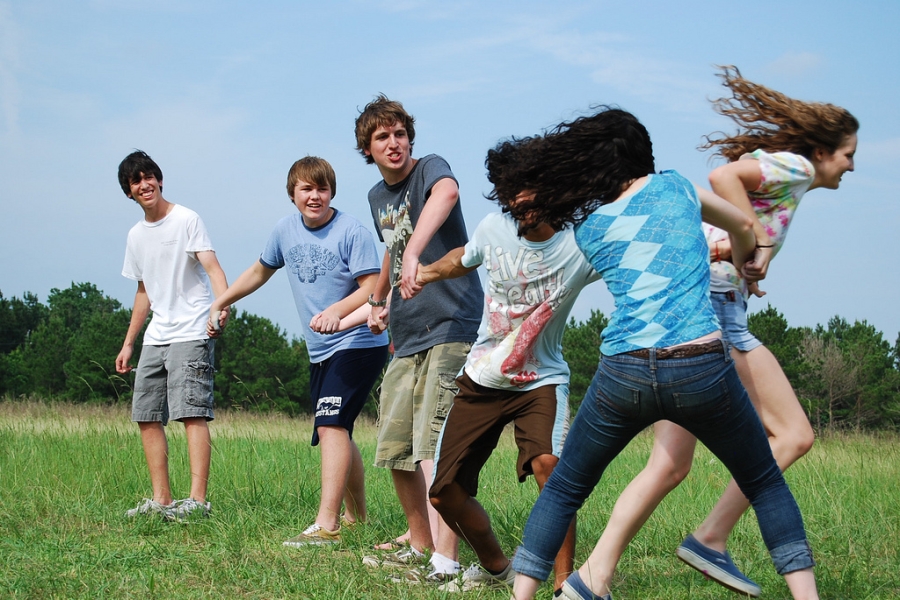
Really?!?! Recess at the middle level?


When the principal of our building said to me, "What do you think about giving our students an opportunity to get outside at lunch?"  I have to admit that while I gave an affirmative response (Sure, that sounds great!), the inner educator cringed.  All that I could imagine was wasting time, students being distracted, chaos and bedlam would ensue, students in 7th and 8th grade DO NOT NEED RECESS!  After all this is a junior high and we have a responsibility to get our students prepared for the high school, and life.  We have so much content to cover...couldn't this time be better served in an academic fashion?


But as the conversation continued, it became more evident that in order to have more successful students, we needed to give them a break.  The American Academy of Pediatrics has said that "free play" or "free time" is beneficial to serve as a break from the rigors in the classroom. Here, we have subjected our students to, in some cases 4 consecutive hours of study with only a 3 minute passing time to break up the day.  By giving students a chance to "rest" their directed attention by providing them time in a natural, active setting we are engaging their involuntary attention.  We let them go to places we don't want them to go during class.  Daydreaming, wandering, focusing on friendships, discussing what they are doing after school, playing tag!

The biggest critique has been that "recess" during the 30 minutes of student lunch (they eat first and then have 10-12 minutes of time outside) is that it has become a distraction.  
I haven't heard any students tell me they are distracted...is it the adults that are distracted? Have we created lessons that are engaging enough so that students don't notice their peers outside during that small window of time?

image source: http://upload.wikimedia.org/wikipedia/commons/1/17/Youths_Playing_Red_Rover.jpg